AI
AI 3D model generators: what they can and can't build in 2026
Opus 5.5 and GPT-6 Astra build 3D in code, Tripo and Meshy sell meshes for cents. What each gets right, where both still fail, and who owns the result.
10 min read
AI
Opus 5.5 and GPT-6 Astra build 3D in code, Tripo and Meshy sell meshes for cents. What each gets right, where both still fail, and who owns the result.
In August, Simon Willison gave Claude Fable 5 a single prompt and a few reference images and got back a playable 3D browser game, Raccoon Heist. His verdict is the most honest summary of where AI 3D stands. “As a finished game project, it’s mediocre. As a starting point from a single prompt I think it’s very impressive” (Simon Willison, August 2026).
Both halves of that sentence are true, and most of what is written about AI 3D quotes only one of them. This piece is about both: what the current models really build, where they still fall down, and what that means if you need a 3D model of something that has to be right.
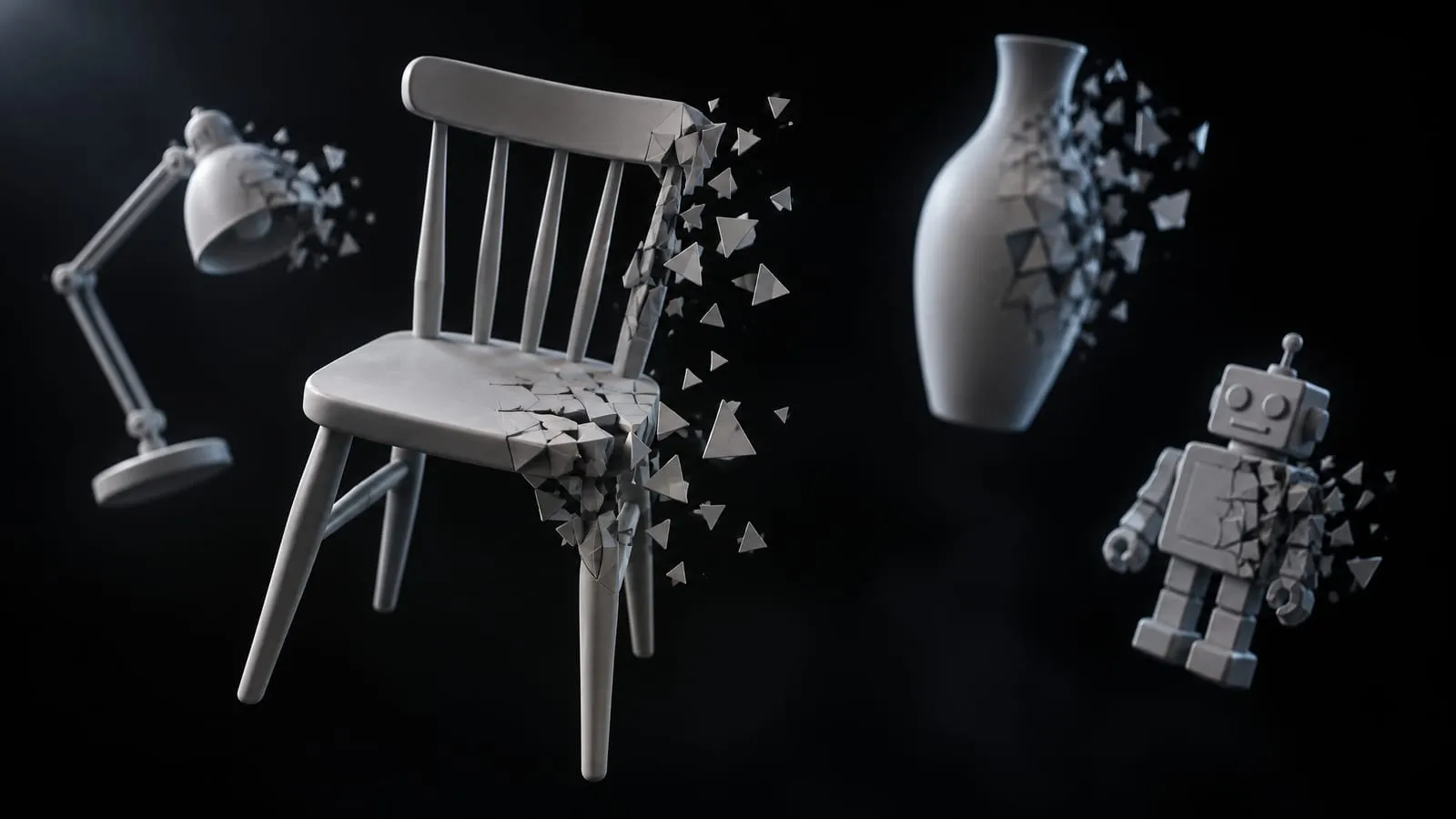
“AI 3D” covers two technologies that work in opposite ways.
Language models that write code. Claude Opus 5.5, OpenAI’s GPT-6 Astra (sold inside ChatGPT, hence “ChatGPT Astra” in the press) and Gemini do not draw a 3D model. They write a program that builds one: a script for Blender, a three.js scene for a browser, or CAD code that describes a part feature by feature. The geometry is exactly what the code says, which makes it precise and editable, and limited by how well the model reasons about space.
Dedicated mesh generators. Tripo, Meshy, Rodin and Tencent’s Hunyuan3D are trained on 3D data and produce a mesh directly from a text prompt or a photo. They handle organic shapes that would be painful to describe in code, and they take seconds. What they cannot do is tell you why the mesh is the shape it is, or change one dimension without regenerating the lot.
The two are converging. The popular open-source bridge between Claude and Blender, blender-mcp, lets the model run arbitrary Python inside a live Blender session and also call Rodin and Hunyuan3D to drop generated meshes into the scene. But their strengths and failures are different enough to take one at a time.
The demos that fill YouTube and X are not faked. When Claude Opus 5 shipped in the summer, people posted a Minecraft clone with fifteen biomes, a kart racer, a submarine game and a ballista beside a castle, each from a single prompt (The Decoder, August 2026). Anthropic’s own launch page for Opus 5.5 mentions a tester who had several models build a game from one prompt, with Opus 5.5 scoring highest “on the strength of its graphics and polish” (Anthropic, September 2026).
What the clips leave out is just as real. The same article that collected the Opus 5 demos notes there were “no standardized tasks, no rating scale, and no control over how many attempts each model gets.” The genres are the ones a model has seen thousands of times in public code: block worlds, flight sims, shooters. And the most ambitious example, Matt Shumer’s Call of Duty imitation “Claude of Duty”, was not one prompt at all once it got going. It was built by “a fleet of AI agents under orchestration” over many rounds, runs to about 55,000 lines, and contains no art assets: every texture, mesh and sound is generated from code (Claude of Duty repository). Its quality scores, which climbed from 3.59 to just over 5 out of 10, came from Claude’s own critic agents rather than human reviewers (Decrypt, July 2026).
None of that makes the work less impressive. It makes it a prototype, which is what everyone who built one says it is.
The most useful numbers come from CAD, because a CAD part is either right or wrong. BenchCAD, published in May, is 17,900 verified CAD programs across 106 families of industrial part, from bolts to brackets. Its authors found that current systems “often recover coarse outer geometry but fail to produce faithful parametric CAD programs”: they miss fine structure, misread engineering parameters, and replace sweeps and lofts with simpler extrusions (BenchCAD, arXiv, May 2026).
The newest models do much better on the same test, with an important condition. In Anthropic’s own evaluation, Opus 5.5 rebuilding parts from four rendered views scored 0.730 on its own and 0.962 when it was allowed tools to render its attempt and check it (Claude Opus 5.5 system card, section 8.13.2). Anthropic’s chart sets this beside the figure OpenAI published for GPT-6 Astra. Each company ran its own test, so treat any ranking between them with caution. The gap between those two numbers is the story: the model on its own is a good guesser, and the model that can look at what it made and fix it is close to reliable.
That score measures how much of the part’s volume overlaps the original. A part can overlap almost perfectly and still be wrong, because a missing hole or a closed slot barely changes the volume. For a CAD engineer that is the difference between a part that fits and one that does not.
Blender modelling shows the same pattern. 3DCodeBench, published in May, tested twelve vision-language models writing Blender code from text and images. Most failures were the model calling Blender’s API wrongly, and even when the code ran, the results “still suffer from disconnected or floating 3D geometric components” (3DCodeBench, arXiv, May 2026). More thinking time and more rounds of refinement improved results overall, which is the same lesson as the CAD numbers: the model gets better when it can look again.
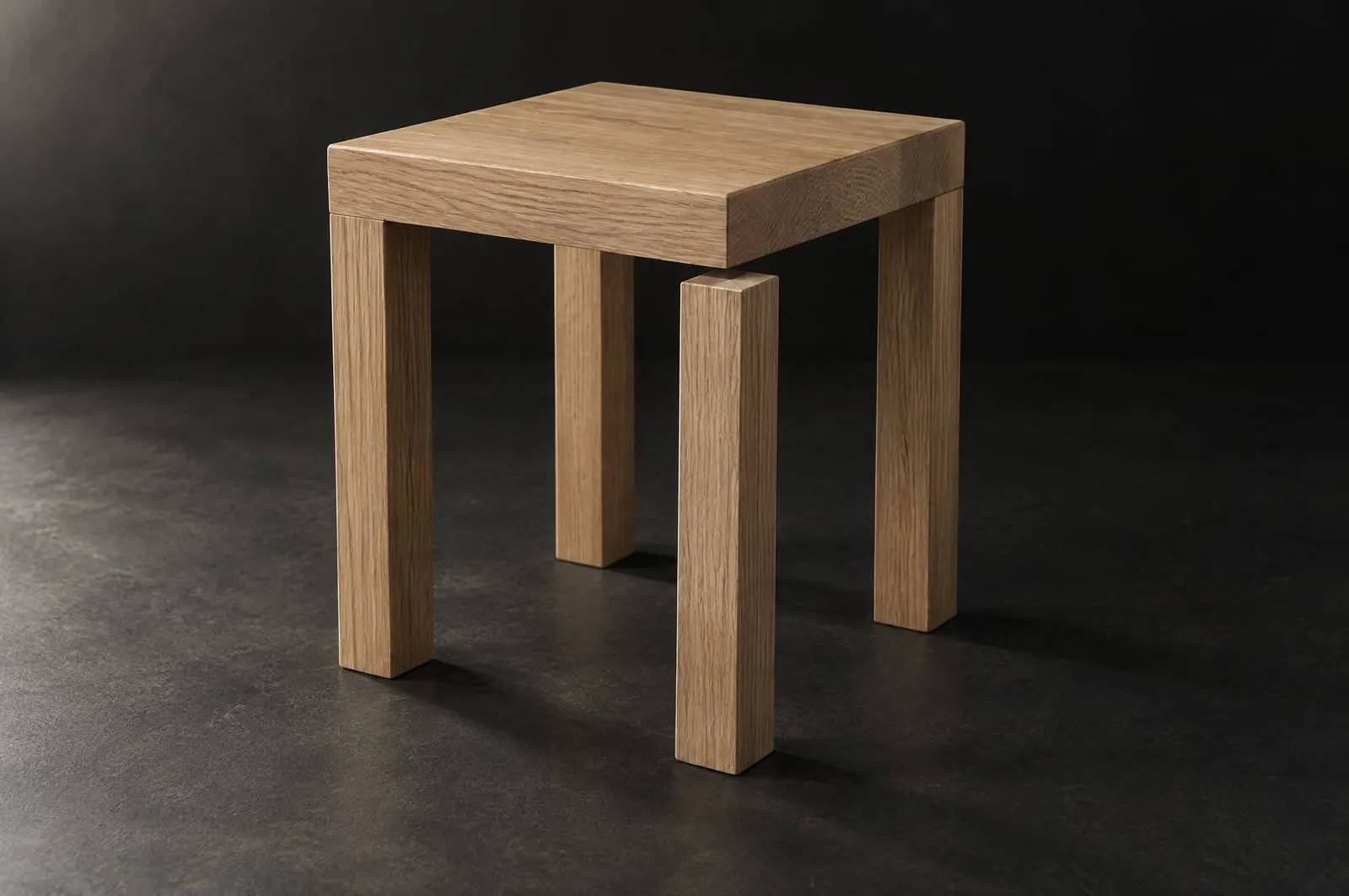
If you want a 3D model from a photo or a sentence, these are the services that offer it through an API, so a developer can build it into their own pipeline.
| Service | Cost through the API | Worth knowing |
|---|---|---|
| Tripo | $0.20 per textured model from text, $0.30 from an image | Clean four-sided topology is a paid add-on; auto-rigging available (pricing) |
| Meshy | Prepaid credits; an API key needs a paid plan | Triangle mesh by default, quad optional; can estimate real-world size (API docs) |
| Rodin (Hyper3D) | API from the $120-a-month Business plan | Broader usage rights on paid plans (pricing) |
| Hunyuan3D (Tencent) | $0.30 to $0.50 a model, PBR materials extra | 200 free credits to start (Tencent Cloud billing) |
| TRELLIS.2 (Microsoft) | Free, if you run it yourself | Open source, MIT licence, needs a GPU with at least 24 GB of memory (repository) |
Higgsfield, often mentioned alongside these, is a video and image platform without a 3D model of its own. Its Blender plugin offers Meshy 5 for 3D (Higgsfield).
Twenty cents for a textured model is the headline, and it is real. For a game studio filling a level with crates, rocks and background furniture, that is a genuine change in what a prototype costs.
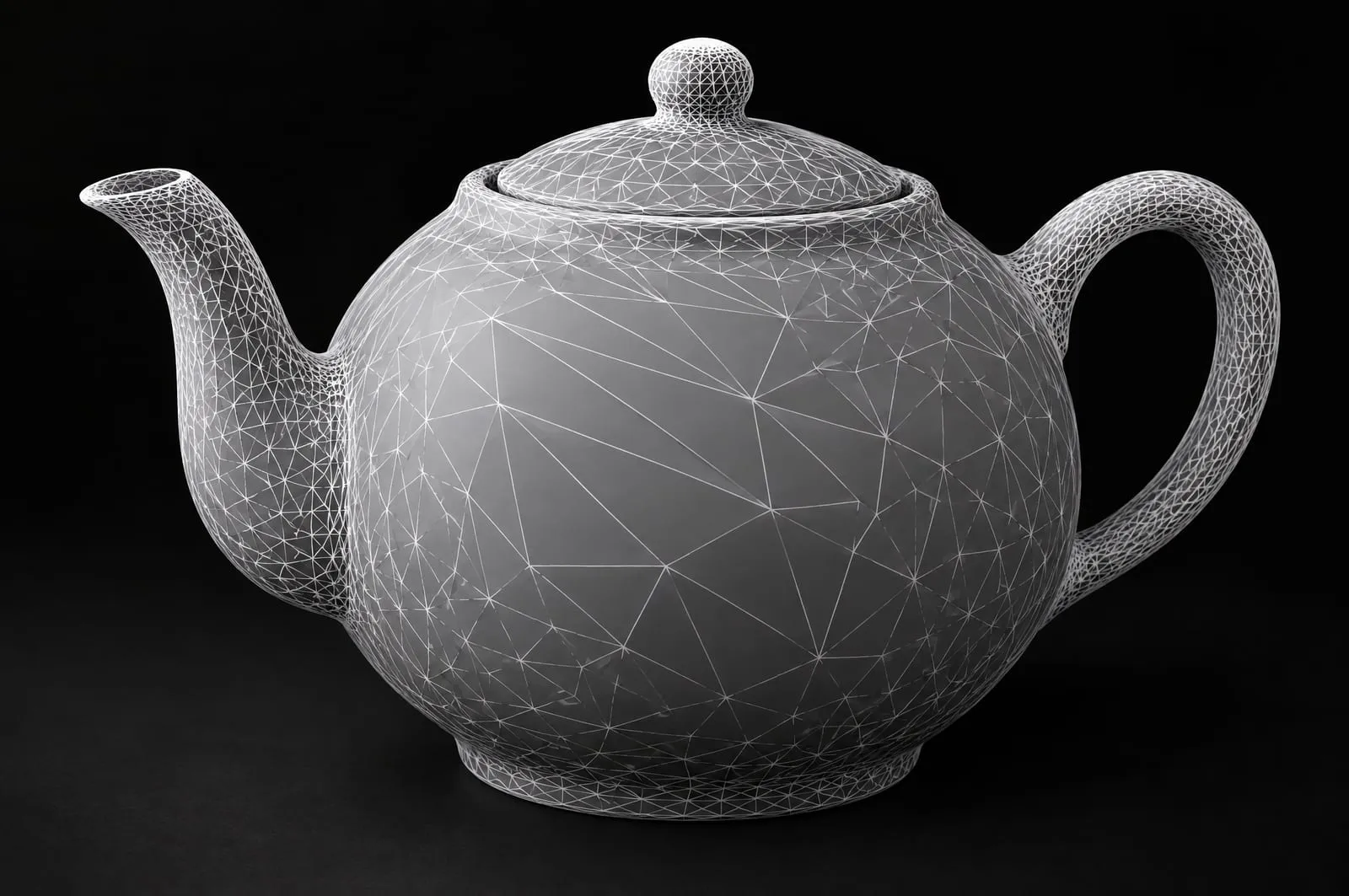
The vendors’ own documentation is also the best guide to the limits, because each fix they sell is a problem the raw output has:
Enthusiasm online and sentiment inside the industry are moving in opposite directions. In the Game Developers Conference’s 2026 survey of more than 2,300 industry professionals, 52% said generative AI is having a negative effect on the industry, up from 30% a year earlier and 18% the year before that. Among people working in visual and technical art it was 64%. Only 7% thought the effect was positive (GDC State of the Game Industry 2026).
Usage tells the same story. Poliigon’s 2025 survey of 3,779 3D artists found that only 22% use AI regularly, 68% have never used an AI 3D model generator, and those who do use AI mostly use it early, for concept and look development (80.lv on the Poliigon State of 3D survey).
That matches what the tools are good at. Early in a project you need a plausible version of an idea quickly, and a plausible version is exactly what a generator produces.
Three things to check before a generated model goes into anything commercial.
Copyright needs a human. The US Copyright Office’s position is that prompts alone are not enough. Protection applies where “a human author has determined sufficient expressive elements”, which can include selecting, arranging and modifying what the AI produced (US Copyright Office, January 2025). A model you generated and used untouched may not be yours to protect.
Open weights are not always open everywhere. Tencent’s licence for the open Hunyuan3D 2.1 “does not apply in the European Union, United Kingdom and South Korea”, and forbids using its outputs outside the licensed territory (Hunyuan3D 2.1 licence). For a business in Britain or Europe, the open-weights version is not licensed for use at all.
Marketplaces disagree. TurboSquid’s rule is blunt: “Models developed using AI tools are not permitted and will be removed” (TurboSquid help). Unity’s Asset Store accepts them, as long as the listing discloses it and the asset does not resemble someone else’s work (Unity support). Check the store’s rules before you plan to sell or buy.
The line runs through one question: does the model have to be a particular object, or just a convincing one?
| You need | AI is |
|---|---|
| A blockout to test a layout, a camera move or a game level | Excellent |
| Background props, set dressing, crowds of objects | Good, with cleanup |
| A concept to react to before anything is designed | Good |
| A playable prototype | Good, as a starting point |
| Your actual product, at its real size, for sale | Not yet |
| A part that has to fit another part | Not without an engineer checking it |
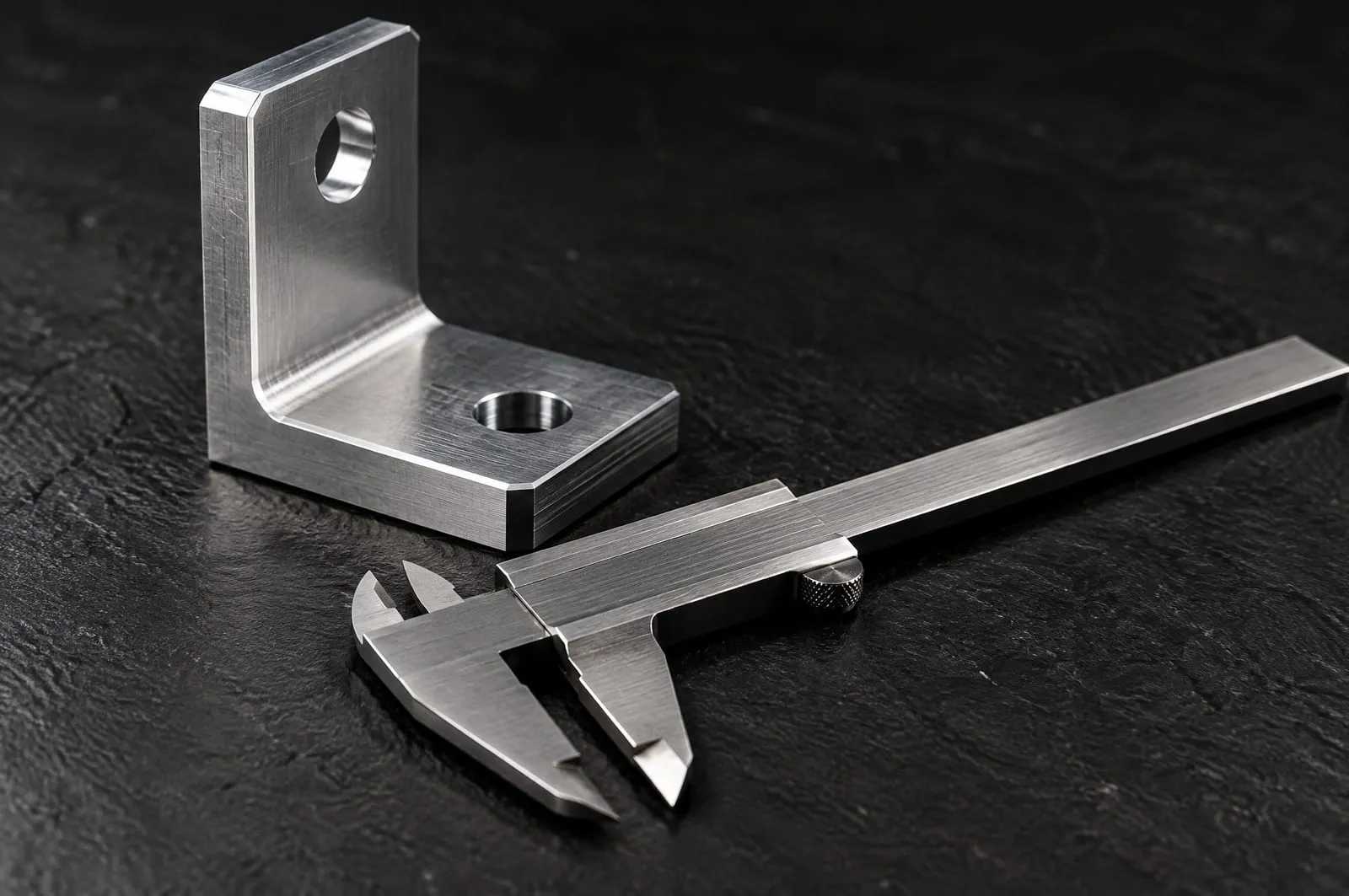
That last group is where product visualization lives. A product page, an Amazon listing or an AR view on a phone makes a claim about a real object, and a model estimated from a photograph cannot back that claim up. It is the same reason we argued that a 3D model for a Shopify product page should come from the CAD behind your renders rather than from a generator: the dimensions are already right, and nothing has to be invented.
None of this is a reason to ignore the tools. The sensible split is to use generation where it is strong, for scene dressing and early concepts, and to build the product itself from CAD, because that is the part a customer is buying. If you are weighing up AI for your own products, our 3D product modeling page shows what a model built from CAD includes, and we are happy to look at your files and tell you which parts of a project generation could honestly take on.
Send us your CAD files, a sketch, or just a description of what you are building, and tell us how far you need it taken. We come back with a fixed quote and a date.