Product Visualization
3D rendering vs product photography for e-commerce
Which one your listings actually need, what Amazon's rules say about it, and what changed when AI got good at generating product scenes.
5 min read
Product Visualization
Which one your listings actually need, what Amazon's rules say about it, and what changed when AI got good at generating product scenes.
Most people ask this question the wrong way round. They ask which method looks better, when the marketplace they are selling on does not care how an image was made and never has.
Amazon’s image policy turns on accuracy, not production method. Photography, CGI and AI generation are all permitted. What is prohibited is showing features, colours or dimensions that do not match the item in the box, adding accessories that are not included, or misrepresenting scale (Amazon Seller Central, AI-generated image guidance).
That reframes the whole decision. The question is not which method is prettier. It is where the truth in your image comes from, because that is what you are being held to.
Those are three different guarantees, and they suit three different situations.
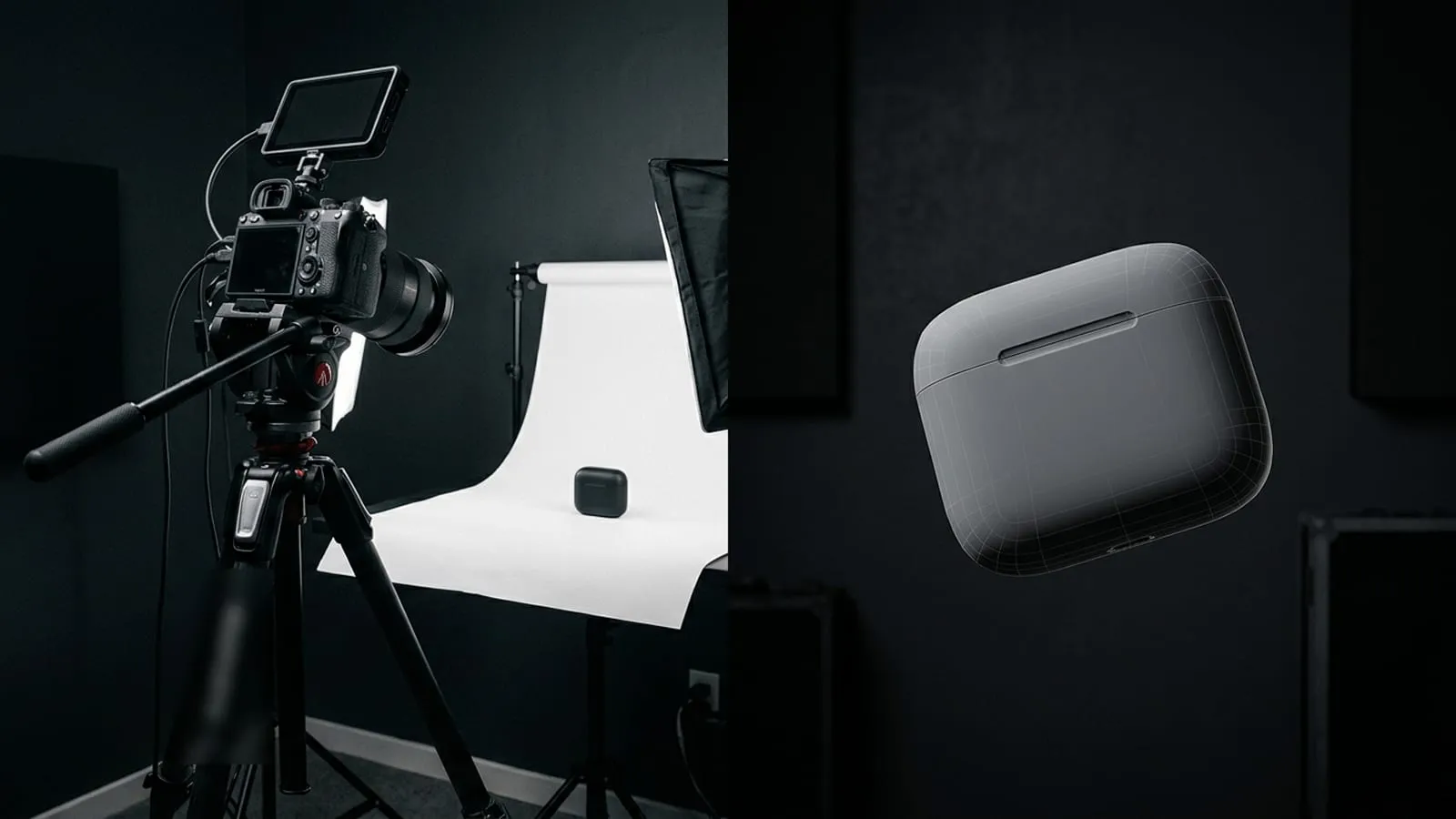
If your product is manufactured from CAD, rendering is accurate by construction. The model is the same geometry the factory works from, so the dimensions in the image are the dimensions in the box. You are not asking a photographer to represent the product faithfully. You are deriving the image from the specification.
Four situations where it is not close:
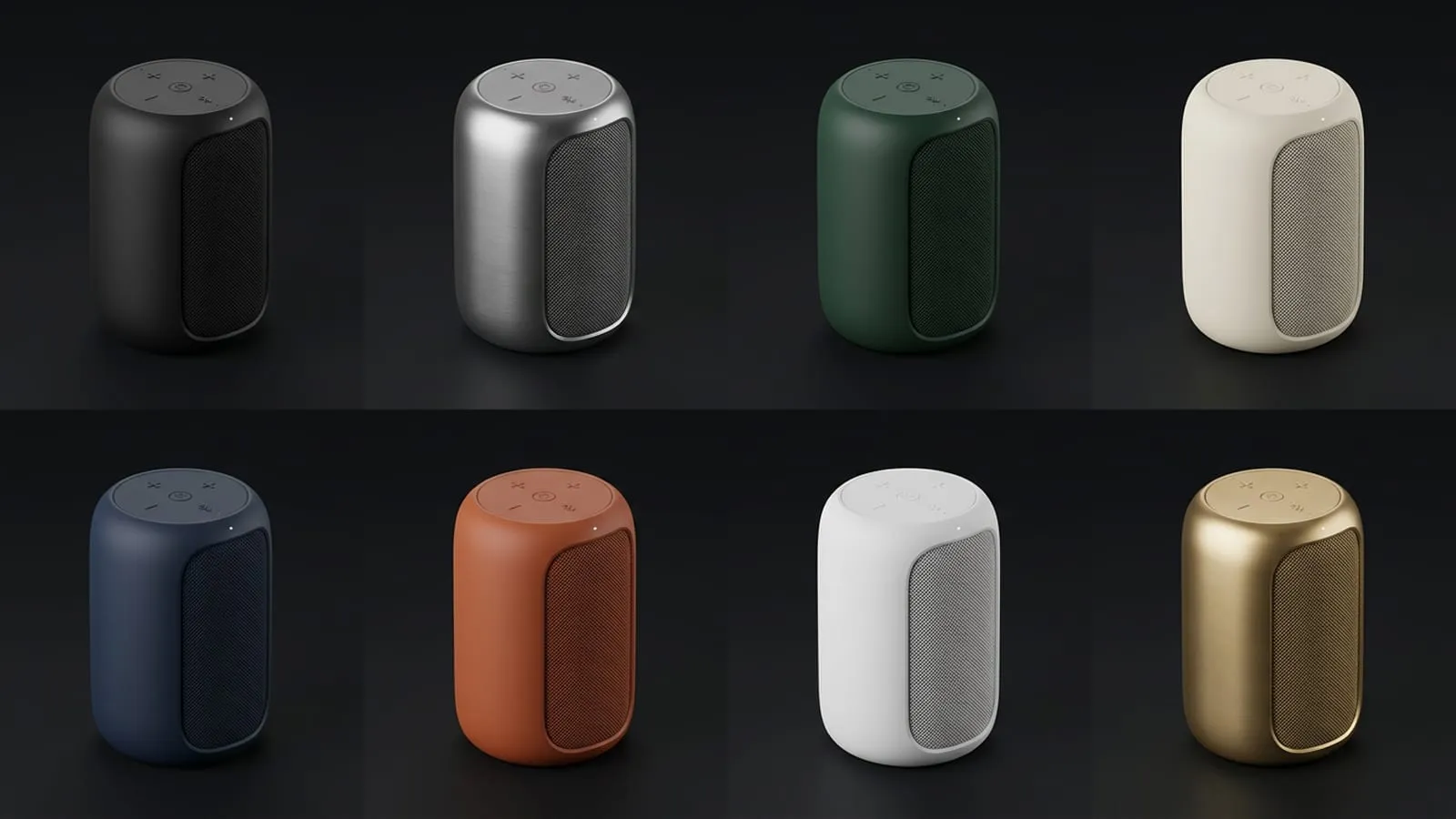
Variants. A second colourway is a render, not another shoot day. A range in six finishes is one scene relit six times. We have one client catalogue running past eighty images built this way, across shelves, ledges, racks and brackets in every room they sell into.
Products that do not exist yet. You cannot photograph a sample that is still in tooling. You can render it, which means the launch page, the trade-show stand and the retailer pitch are all ready before the first unit ships.
Catalogues that keep growing. Photography costs scale with SKU count forever. Rendering front-loads the cost into building the scene, then each new product is a render into a set that already exists.
Anything needing exact scale. Amazon explicitly prohibits misrepresenting product scale. A render built to real-world dimensions cannot get this wrong. A stylist with a prop can.
Textiles. If you sell clothing, upholstery, bedding or anything whose selling point is how the material behaves, photograph it.
This is not a limitation that better software will quietly fix. Fabric appearance depends on drape, and drape depends on physical properties that have to be measured per fabric rather than assumed. The testing is slow and expensive, and apparel brands routinely hold libraries of more than a thousand fabrics. Worse for consistency, each 3D package models drape differently, so the same garment rendered in two tools looks like two garments, and neither necessarily matches the physical sample it was meant to represent.
There is a second problem underneath that one. A woven or knitted textile is not a surface, it is thousands of fibres of possibly several materials, and its behaviour after washing and wearing is part of what the customer is buying. Rendering can approximate how a fabric looks. It cannot yet tell you how that fabric will hang on a real shoulder after six washes, and for apparel that is frequently the whole question.
Rough rule: if the material is the product, shoot it. If the geometry is the product, render it. A steel shelf bracket is geometry. A linen shirt is material. Most catalogues contain both and should use both.

This is the part that has moved fastest. Google’s Nano Banana models have gone from a viral curiosity to a serious production tool in about eighteen months, through Nano Banana Pro in November 2025 and Nano Banana 2 in February 2026. The capability that matters for commerce is subject consistency: the model can hold onto the same object across repeated edits, which is what makes iterative work possible rather than a slot machine.
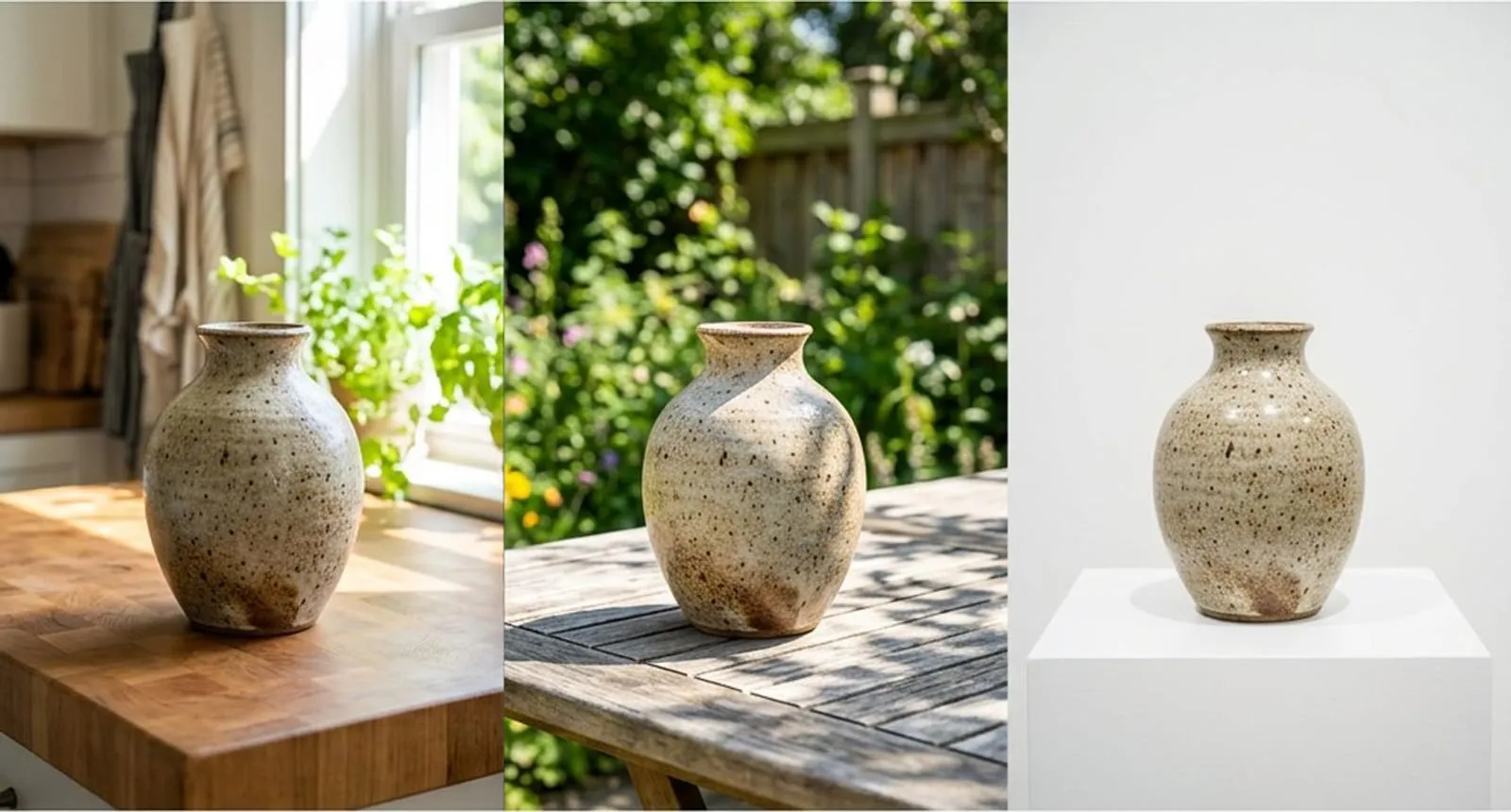
Used honestly, it is genuinely excellent, and it has taken real work away from studio shoots. Backgrounds, lifestyle context, seasonal variations of a scene, extending a shot to another aspect ratio: all of this used to be a location, a stylist and a day. Amazon permits every one of those uses, because they alter the setting rather than the product.
The line is exactly where you would expect it. Generating a scene around an accurate product image is allowed. Generating the product is not, because the model does not know your SKU. It knows what products of that kind tend to look like, which is a different thing and is precisely the gap Amazon’s accuracy rule is written to catch. There is also a disclosure requirement now: if an image contains photorealistic AI-generated people, Amazon expects you to declare it.
So AI has not replaced the question, it has split it. You still need one accurate image of the actual product, from a camera or from CAD. What AI removed is most of the cost of everything that surrounds it.
| Your product | Use |
|---|---|
| Manufactured from CAD, multiple variants | Rendering |
| Not manufactured yet | Rendering |
| Large catalogue that keeps growing | Rendering |
| Clothing, upholstery, soft furnishings | Photography |
| Anything sold on how the material behaves | Photography |
| Backgrounds, lifestyle scenes, seasonal sets | AI, around an accurate product image |
| Main listing image, any category | Whichever is accurate, on white, product filling the frame |
If you are weighing the cost side specifically, our FAQ answers that directly. This piece is about which method your product actually calls for, which is a different question and usually the one worth settling first.
Send us your CAD files, a sketch, or just a description of what you are building, and tell us how far you need it taken. We come back with a fixed quote and a date.